News
Title: The Madurese Clurit: From Farming Tool to Cultural Symbol
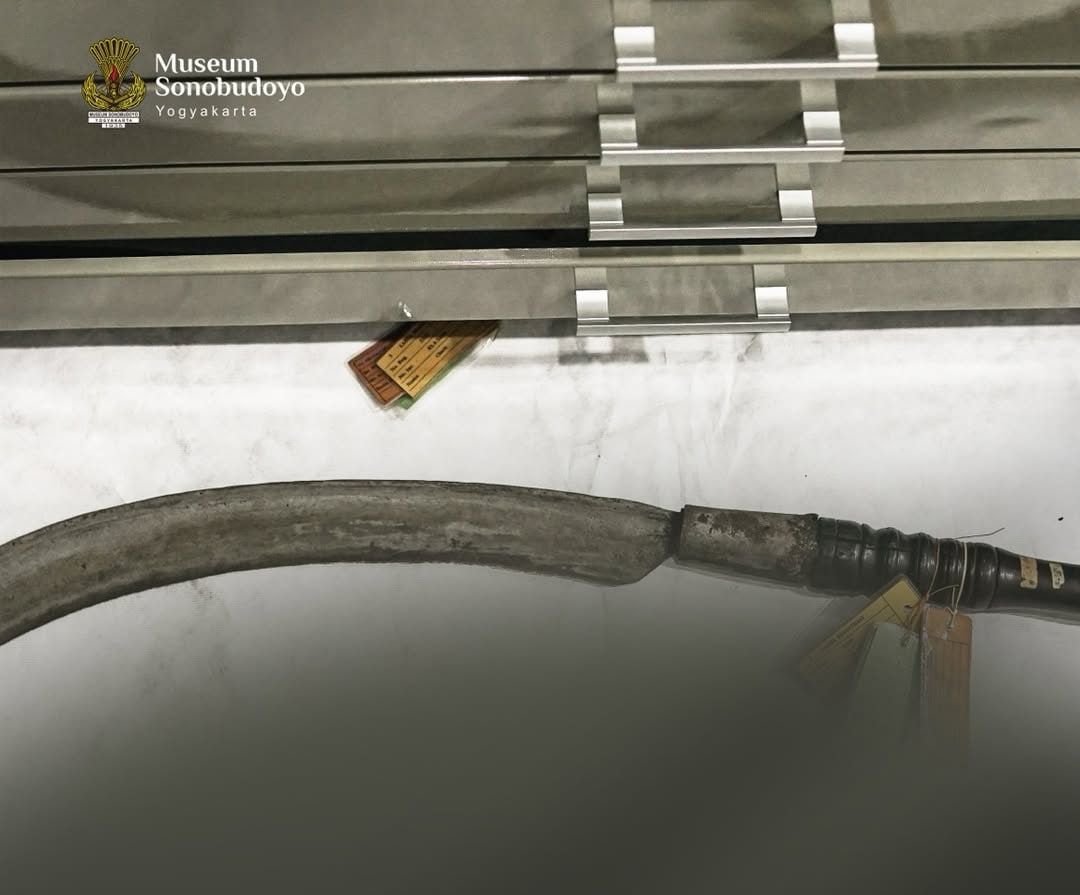
Not all clurit the traditional sickle associated with Madura—are small in size. One remarkable example preserved in the collection of Sonobudoyo Museum is significantly larger than those commonly seen today. Measuring nearly one meter in length, its blade curves like a crescent moon. This particular clurit is estimated to have been made in the nineteenth century, around the 1800s, in western Madura. Its impressive size and distinctive shape make it more than just a tool; it represents courage, identity, and the historical dynamics of the Madurese people.
In the daily life of Madurese communities, the clurit has long served as an agricultural tool. Farmers use it to cut grass, clear vegetation, and maintain their fields. Over time, however, the clurit also evolved into a cultural symbol closely associated with Madurese identity. Its simple yet assertive shape often reflects the character attributed to the community—bravery, resilience, and a strong sense of honor.
Today, most clurit blades found in everyday use are relatively small, typically measuring between 50 and 60 centimeters. These sizes are practical for agricultural work and daily tasks. In contrast, the museum’s specimen is considerably larger, reaching about 100 centimeters in length. Such dimensions suggest that in earlier periods there were broader variations in the form and function of the clurit than what is commonly encountered today.
This particular example belongs to a type known as clurit bulu anyeman. The blade resembles the elongated feather of a chicken and curves sharply like a crescent. Despite its large appearance, the blade is relatively thin, making it lighter and easier to handle. This design reflects the craftsmanship of traditional blacksmiths, who skillfully balanced size, sharpness, and usability in forging the blade.
Beyond its role in agriculture, the clurit has also been linked to aspects of self-defense in Madurese history. One cultural practice often mentioned in this context is carok, a duel that historically arose from disputes of honor between individuals or groups. Within the local cultural framework, such events were not merely seen as acts of violence but were tied to complex notions of dignity, social status, and traditional conflict resolution.
This large clurit, believed to have originated from regions such as Sampang and Bangkalan, demonstrates how a seemingly simple object can embody a long historical narrative. It speaks not only of farming practices or traditional weaponry, but also of social values, craftsmanship, and the cultural identity of Madurese society formed over centuries.
Today, preserved within a museum collection, the clurit carries a new meaning. It is no longer merely an agricultural implement or a reminder of past conflicts. Instead, it stands as a cultural artifact—one that highlights the ingenuity of traditional artisans and reflects the enduring heritage of a community whose history continues to be remembered through objects like this.