News
A Small Jarlet, A Subtle Trace of Civilization from the Song Dynasty
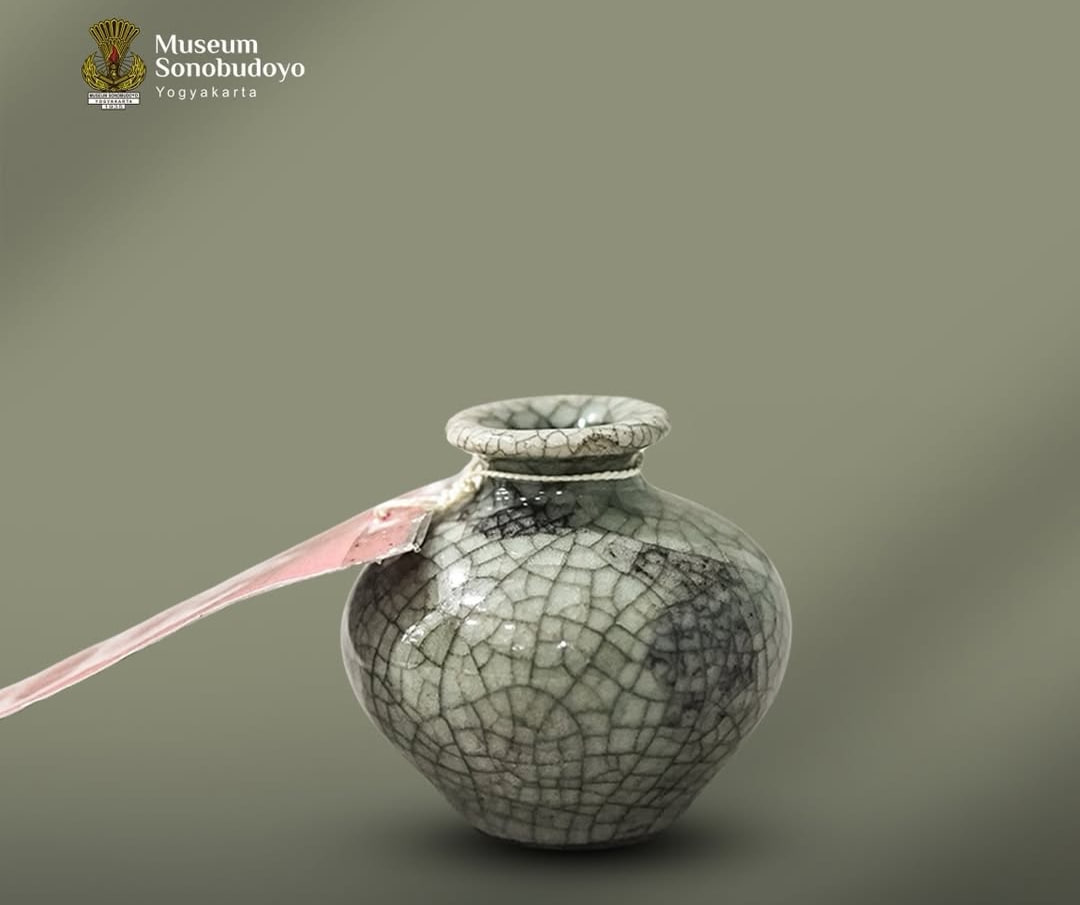
This small jarlet may once have been seen simply as a container for cosmetics belonging to members of the aristocracy. Yet over time, the object has come to hold something far more valuable: a story about the long journey of culture, trade, and aesthetic ideals in past civilizations.
A buli-buli often referred to in English as a jarlet is a small ceramic container shaped like a miniature jar. The example with the distinctive “crackle” pattern is believed to date back to the Song Dynasty (960–1279 CE) in China. Scholars often associate ceramics of this type with kilns located in Zhejiang, a region long known for producing some of the finest ceramics in Chinese history. The jarlet typically has a rounded body and a small brown lip, with balanced proportions that reflect the restrained elegance characteristic of Song ceramics.
Its surface is coated with a thick glaze in a greenish-brown tone. The most distinctive feature is the fine network of natural cracks known as crackle glaze. Rather than being a flaw, these cracks result from the difference in contraction between the ceramic body and the glaze layer during the cooling process after high-temperature firing. This effect demonstrates the remarkable technical mastery achieved by ceramic artisans during the Song period. At the base of the jarlet, a reddish slip layer commonly found in southern kilns indicates careful finishing techniques applied by skilled craftsmen.
In ceramic studies, this type of object is classified as stoneware, meaning it was fired at high temperatures that produced a dense and durable structure. The warm tones of its glaze and its understated appearance reflect the aesthetic philosophy of the Song Dynasty. This artistic style valued simplicity, balance, and natural beauty rather than excessive ornamentation.
During its time of use, small jarlets like this served a practical purpose. They were commonly used to store cosmetics, perfume oils, or body care mixtures, especially among members of the elite. Despite their modest size, such containers were part of the refined daily life of noble households.
Today, however, their significance extends far beyond their original function. These jarlets are now regarded as cultural artifacts that reveal insights into historical craftsmanship, aesthetic values, and the trade networks that once connected different regions of Asia.
The delicate cracks on the glaze can be seen as traces of time preserved on the ceramic surface. Once a simple utilitarian container, the small jarlet now invites us to reflect on the past reminding us to appreciate the quiet beauty of simplicity, balance, and the natural elegance that endures across centuries.