News
From Mataram Warriors to a Bustling Education Hub: The Transformation of Tambakbayan
Today, anyone passing through Tambakbayan in Caturtunggal, Depok, Sleman, is likely to see university campuses, food stalls, boarding houses, hotels, and busy streets filled with students from different parts of Indonesia. The area feels like a miniature version of the country itself. People arrive with different languages, customs, and backgrounds, then meet and share everyday life.
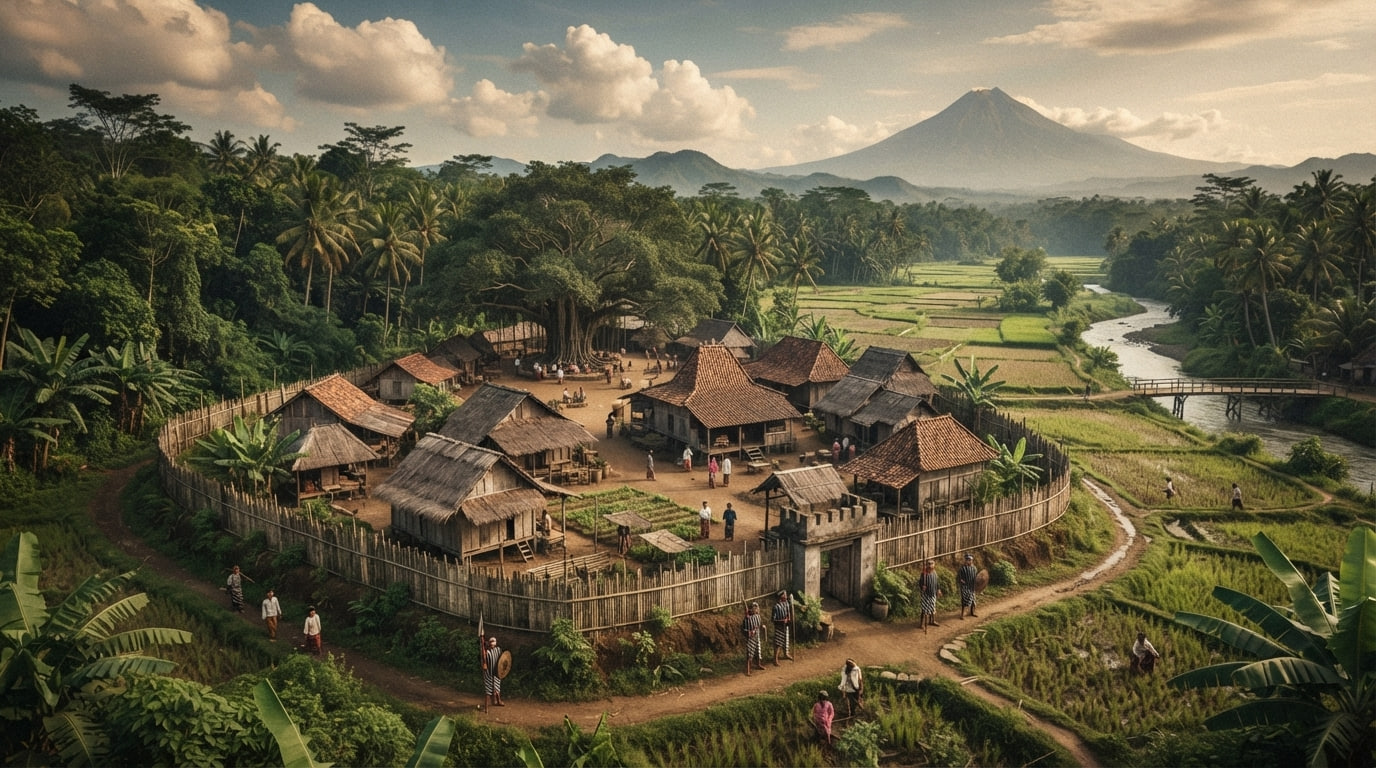
Yet long before campus signs and modern buildings filled the area, Tambakbayan was reportedly covered by dense forest. The transformation has been so dramatic that it is difficult to imagine that one of Yogyakarta’s education hubs was once dominated by trees and relatively unproductive land.
According to local accounts, the name Tambakbayan is connected to the defense system of the Mataram Kingdom. One story tells of a military commander named Tambakbaya, who served during the reign of Sunan Amangkurat Agung. He was remembered for his exceptional courage and his duty to protect the king.
The story continues with the attack led by Trunojoyo against the Mataram palace in Plered, Bantul. Tambakbaya and his 40 soldiers were said to have tried to hold back the invading forces. Outnumbered, they eventually fell in battle. Their sacrifice, however, reportedly gave Sunan Amangkurat Agung and his family an opportunity to escape toward Tegal.
Behind this account of warfare lies another story involving conflict within the royal family. According to the Babad Tanah Jawi, as referenced in the local historical account, Trunojoyo’s rebellion was connected to a dispute between Sunan Amangkurat Agung and his son, Prince Adipati Anom, involving a young woman named Roro Oyi.
Roro Oyi was a girl from Surabaya entrusted to Ngabehi Wirareja for care before she was eventually meant to become the king’s wife. However, Prince Adipati Anom fell in love with her. The situation escalated into a serious royal conflict, resulting in executions and the prince’s expulsion. Later, Prince Adipati Anom sought help from Panembahan Rama to attack Mataram. Trunojoyo subsequently led forces that overcame the kingdom’s defenses, including the troops commanded by Tambakbaya.
This story illustrates how a place name can be connected to major events that occurred long before the area became the settlement we know today. Although details in oral historical accounts should be approached carefully, the story of Tambakbaya remains part of the community’s collective memory of its past.
A small settlement between forest and plantations
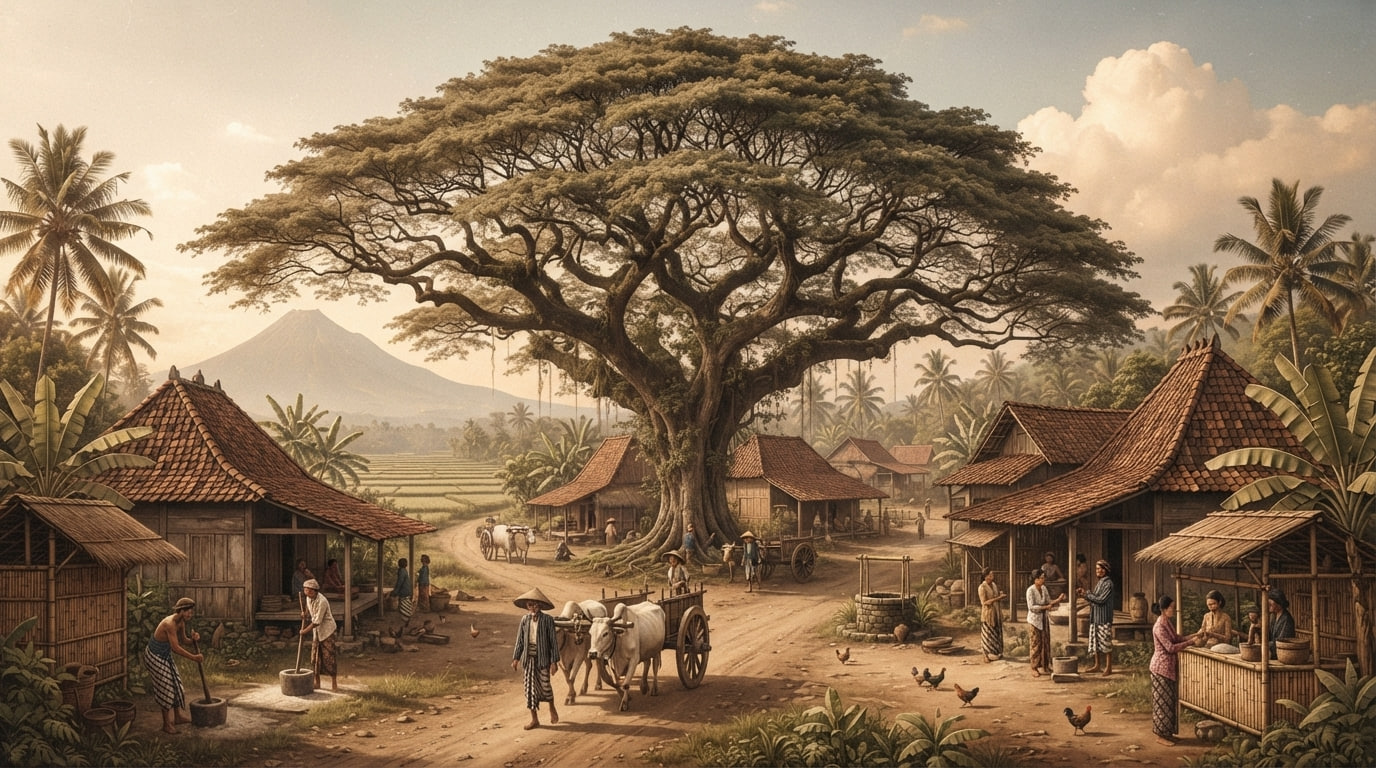
Tambakbayan’s history is not limited to royal politics and warfare. There are also accounts of everyday life from a period closer to the present.
Mardi Paimo, who reportedly had lived in Glendongan since 1935, recalled a time before Laksda Adisucipto Road existed in its current form. People crossed the river using a simple wooden bridge made with planks approximately three centimeters thick. The bridge stood east of Glendongan, near the area north of what is now Universitas Proklamasi 1945.
At that time, Glendongan Utara and Glendongan Selatan reportedly had only around 18 houses. Residents lived in a close-knit community. The surrounding land also played an important economic role. According to Mardi, the Dutch colonial government and the Yogyakarta Sultanate distributed land for growing sugarcane and tobacco, which were purchased by factories. Some residents also accepted clothing offered through the program and went on to work as farmers.
Life, however, was not always easy. A local account describes an incident involving the seizure of kekancingan documents, which were associated with rights to cultivated land. The incident, linked in the account to a figure or term known as “Macan Putih,” reportedly left residents without their documents. The story serves as a reminder that people’s relationship with land involves more than farming; it also concerns security and certainty over the spaces in which they live.
Meanwhile, the Jangkaran forest—now more widely known as Babarsari—once occupied land along the Tambakbayan River. It extended westward toward areas that now include the former National Nuclear Energy Agency complex and Atma Jaya University, as well as north and south of the Mataram Canal. The area was described as dry and relatively unproductive.
When forest gave way to education
A major transformation began with the development of Babarsari. The source account identifies the inauguration of Babarsari Campground by President Soeharto in 1972 as an important milestone that helped make the name Babarsari more widely known.
Universities and supporting facilities subsequently began to emerge throughout Tambakbayan. In the western area, development included the second campus of Universitas Pembangunan Nasional Veteran Yogyakarta in 1976, Atma Jaya University, the BATAN complex, a church, and a hotel. In the east and north, other educational institutions appeared, including Yogyakarta Tourism Academy, Wira Husada College of Health Sciences, API Polytechnic, Universitas Proklamasi 1945, and the National Institute of Technology Yogyakarta.
The arrival of these institutions changed Tambakbayan’s character. An area once known for its forest and less productive land evolved into a busy urban environment, with students becoming an important part of everyday life. According to the local hamlet head quoted in the source, the community supported this development. Building projects were discussed with residents so that changes could align with local expectations.
Nevertheless, growth did not always bring positive experiences. Tambakbayan once acquired a reputation as a “red zone” because of clashes involving some newcomers. According to the source, that reputation has gradually faded. Local residents have since made efforts to involve newcomers in community activities, including the traditional merti desa ceremony.
Merti desa is an expression of gratitude to God, observed through customary ceremonies and communal activities. In Tambakbayan, the tradition also provides an opportunity for long-time residents and newcomers to meet. People who arrive to study, work, or settle in the area do not have to remain outsiders; they can become part of the community.
Tambakbayan, where many stories meet
Tambakbayan’s journey shows how quickly a landscape can change. A forest once considered relatively unproductive has become a densely populated area known for education and housing. Stories of Mataram warriors now coexist with memories of wooden bridges, sugarcane and tobacco plantations, and the growth of modern university campuses.
In a place like this, history does not belong exclusively to the past. It lives on in place names, stories passed down by older generations, settlement patterns, and traditions that continue to be practiced. Students arriving from across Indonesia are also helping shape a new chapter in Tambakbayan’s story.
Perhaps that is what makes Tambakbayan so interesting. It is more than a busy neighborhood of boarding houses and campuses; it is a place where layers of history come together. From the courage attributed to Mataram’s warriors to the increasingly diverse life of its residents, Tambakbayan shows that a place can continue to change while still making room to understand its origins.