News
Kiyudan: The Village That Once Found Shelter Beneath the Rain Tree
The name of a village can hold a story far richer than we might imagine. It may come from a person who once lived there, an event that left a lasting mark, or something that was once part of everyday life. In Kiyudan Hamlet, Caturtunggal, Depok, Sleman, one account of the village’s origins points to a tree.
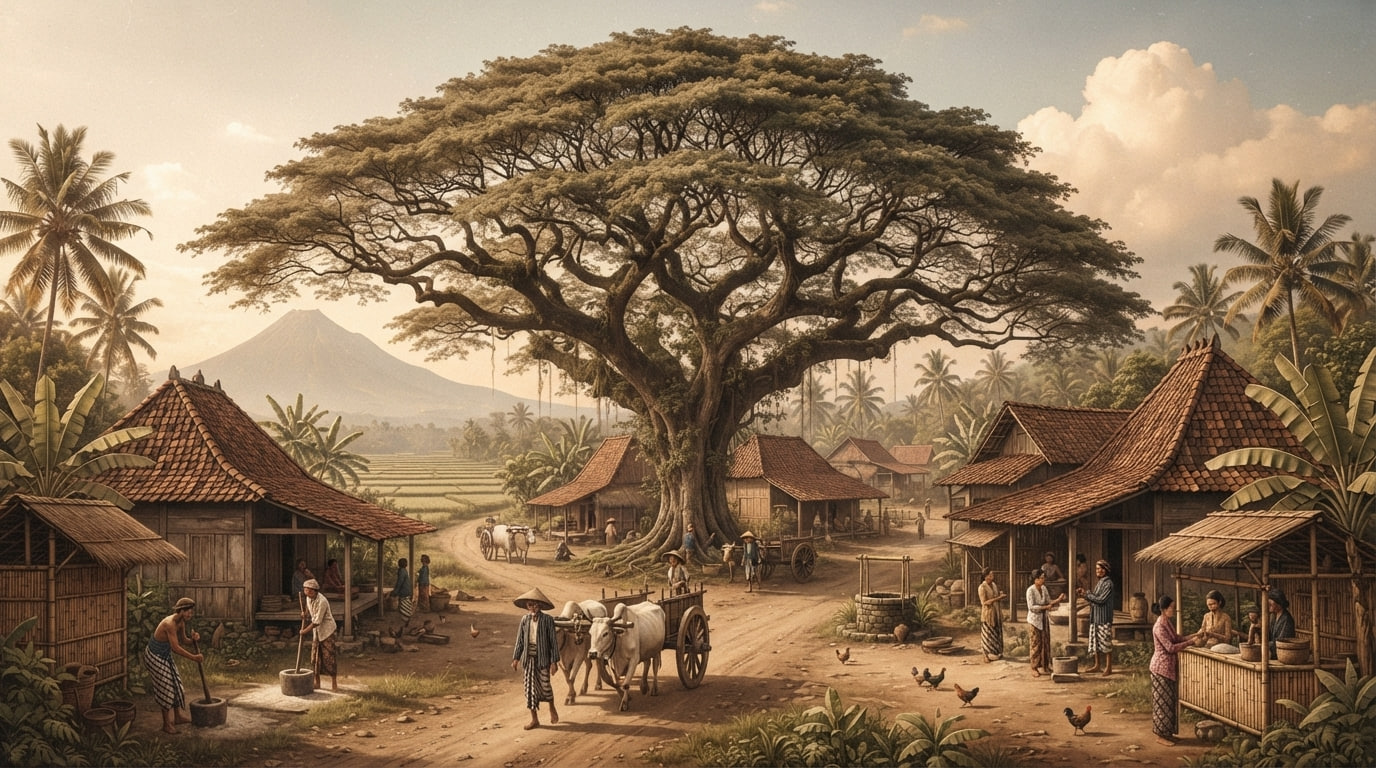
According to oral histories shared by several local community figures, the name Kiyudan is believed to be connected to the munggur tree, also known as the rain tree (Samanea saman). In the local dialect, the tree is referred to as ki udan, interpreted as “rain tree.” The name is thought to relate to the way its leaves fold when rain falls. In the past, munggur trees reportedly grew abundantly in the area, making them a familiar part of the landscape and, eventually, a possible source of the village’s name.
Over time, ki udan is believed to have merged into the word Kiyudan. This kind of transformation is not unusual in Javanese place names. Words originally used to describe objects or features of the surrounding environment can gradually become place names, surviving even after the landscape that inspired them begins to change.
Yet Kiyudan’s story is not limited to trees and the origins of its name. The hamlet also carries memories of a time when defending Indonesia’s independence was not merely a chapter in a history book, but a struggle unfolding around people’s own homes.
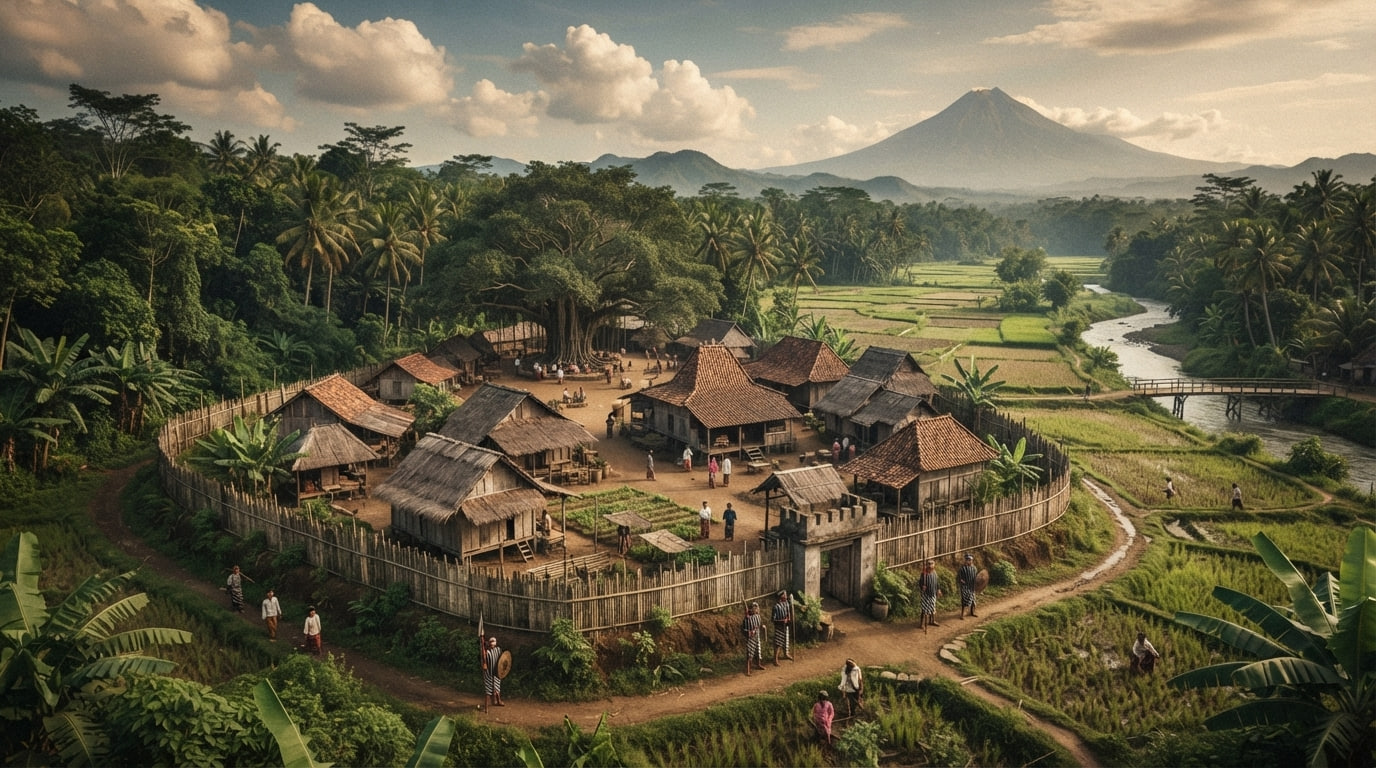
During the Second Dutch Military Aggression, around 1948–1949, Kiyudan reportedly became a hiding place for Indonesian Republican troops, particularly the Gatotkaca Platoon. Residents’ homes were used as shelters and helped support the fighters’ logistical needs. In a period filled with danger and uncertainty, everyday life became closely intertwined with the struggle for independence. Houses that normally provided a place for families to rest also served as refuges for those fighting to defend the young republic.
This history gives Kiyudan a distinctive place in the story of the local community. Indonesia’s independence struggle is often remembered through major battles, prominent figures, and nationally significant events. Yet behind those accounts were villages whose residents also played a role, including people who offered shelter and support to the fighters.
Unfortunately, the natural landmark believed to have inspired Kiyudan’s name has faced a different fate. Urbanization and the expansion of residential areas have reduced the space available for munggur trees. Trees that reportedly once grew abundantly and helped define the landscape are now said to be close to disappearing. The name Kiyudan remains, even as the natural feature that may have given rise to it gradually fades away.
This is where a village name becomes a reminder. Kiyudan holds two layers of history: the relationship between its people and their natural surroundings, and the community’s involvement in the struggle to defend Indonesia’s independence. Neither may be immediately visible in daily life, but both remain part of a heritage worth recognizing.
Preserving Kiyudan’s story means doing more than simply tracing the origin of its name. Oral histories need to be passed on, local accounts of the independence struggle need to be documented, and the trees that form part of the hamlet’s ecological identity deserve greater attention. After all, when the last tree disappears or the last historical witness is gone, a place name may survive—but some of the stories behind it risk being forgotten.