News
Mrican: A Village Shaped by Mataram’s Legacy and the Colonial Sugar Industry
In Caturtunggal, Depok, Sleman, lies a settlement known as Mrican. Today, it forms part of Yogyakarta’s expanding urban area, surrounded by residential neighborhoods and the everyday activities of local communities. Yet, looking back into its past reveals a much richer story: colonial-era sugarcane plantations, several competing explanations for its name, and an ancestral figure whose memory is still honored through traditional ceremonies.
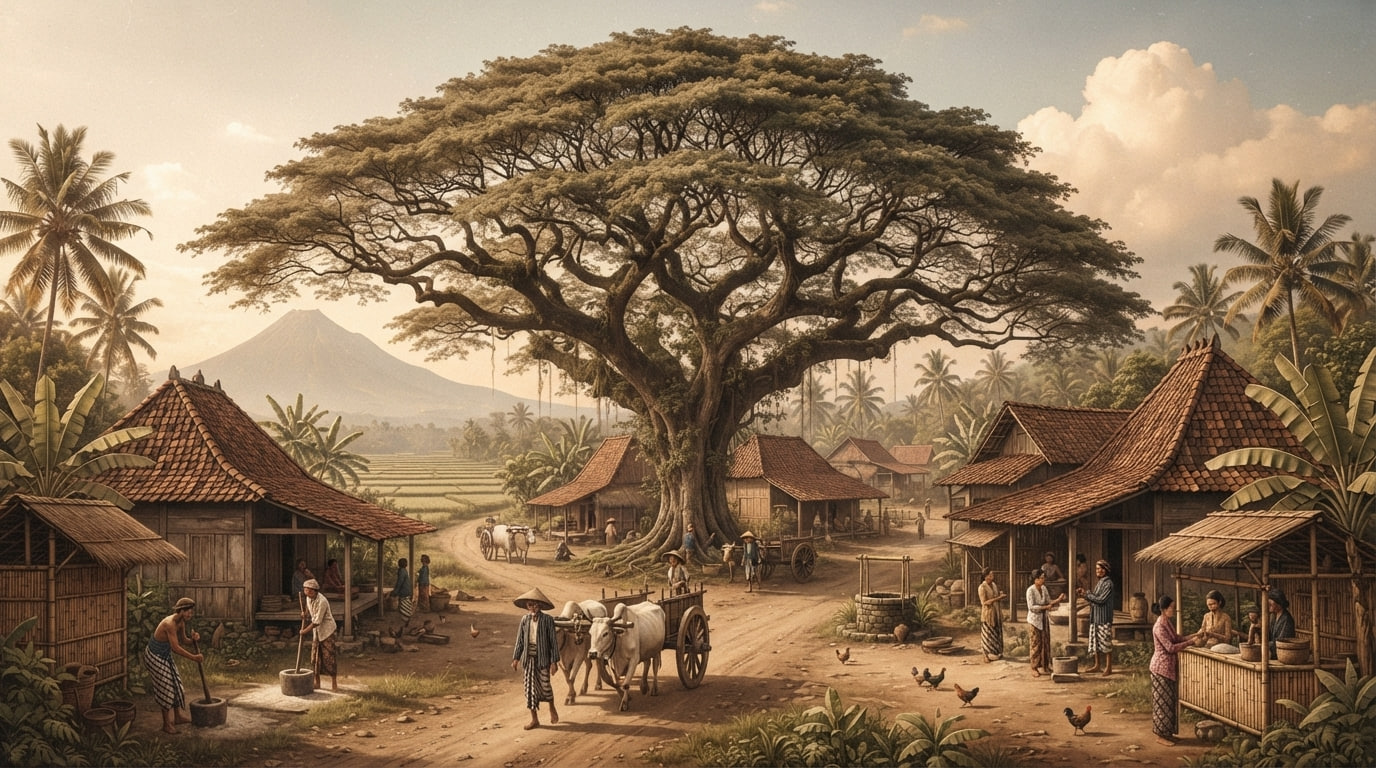
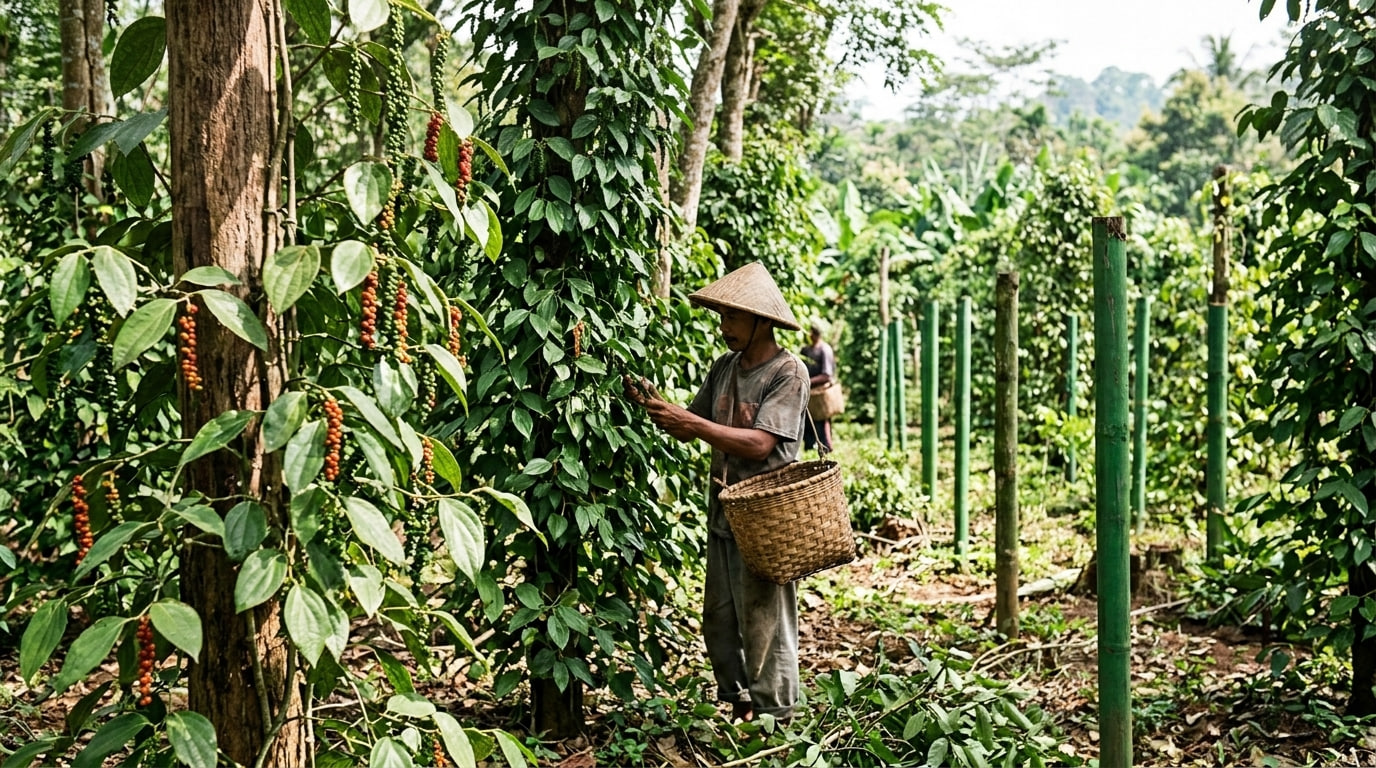
There are several stories about how Mrican got its name. One links it to the pepper plant, known in Javanese as mrica. According to local tradition, the area was once filled with large trees, with climbing plants spreading across their trunks and branches. When a resident identified one of these plants as mrica, the name eventually became associated with the settlement known as Mrican.
Another story connects the name to a Dutch man who worked at Demakijo Sugar Factory. According to an account passed down through generations, he had previously worked at Meritjan Sugar Factory in East Java. The name Meritjan is believed in this version to have some connection with the name Mrican, although the story does not clearly establish how the name might have changed over time.
A different explanation leads to a figure known as Kyai Guno Mrico. For some members of the community, he is more than a character in an old tale. He is regarded as an ancestor who first opened the area for settlement. His surname, Mrico, is believed to be the origin of the village's name.
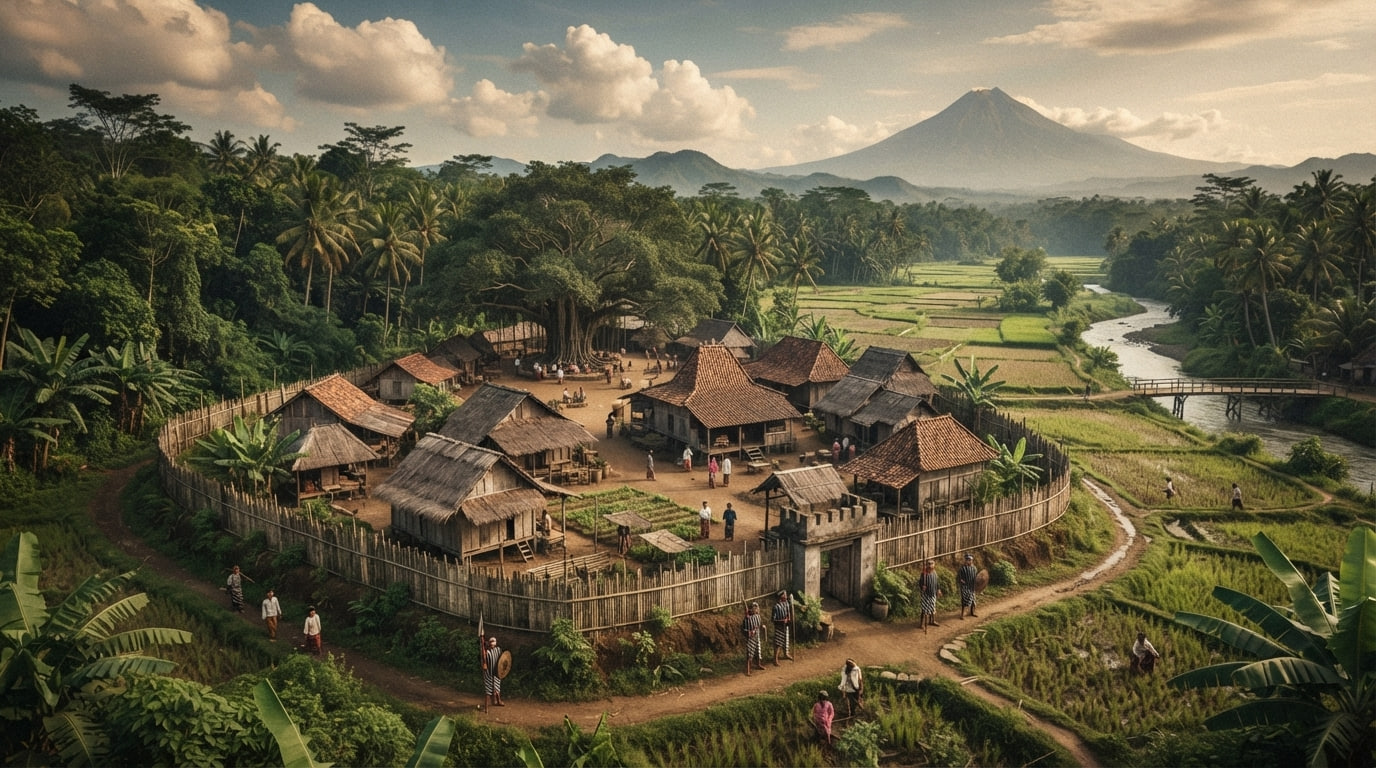
The stories about Kyai Guno Mrico are connected to the Mataram Kingdom, which was based in Kotagede. He is said to have lived during the time of Panembahan Senapati and was reportedly a fellow student of the founder of Mataram. However, the identity of the teacher who instructed the two men remains unclear.
In one popular account, Kyai Guno Mrico played an important role in the kingdom. The story says that territories conquered by Mataram were required to provide women to be brought before the king. When one woman proved difficult to take, Kyai Guno Mrico supposedly managed to bring her to the palace in Kotagede while she was asleep in her own bed. In recognition of his service, he was said to have received a piece of land that later became known as Mrican. He was also reportedly entrusted with maintaining security at Kotagede Market.
Another account claims that before becoming a royal servant, Kyai Guno Mrico had been a highway robber. These stories show how his figure has survived in local memory through different versions of the past. Although the details of his life remain uncertain, the community's respect for him has endured.
Interestingly, Kyai Guno Mrico is associated not only with Mrican in Caturtunggal but also with Mrican in Giwangan, Umbulharjo, Yogyakarta City. There, he is known as Mbah Guno Mrico, and his name has been given to both the neighborhood and a local street. His grave is a place where residents gather for visits and traditional nyadran ceremonies.
These ceremonies are generally held during Ruwah and Mulud in the Javanese calendar, as well as before Eid al-Fitr. Two or three days before Ramadan, residents hold a communal feast featuring ketupat, rice cakes cooked in woven palm-leaf cases. In this tradition, ketupat symbolizes an acknowledgment of lepat, or personal mistakes and sins. Through the gathering, residents forgive one another and pray for deceased relatives, especially Mbah Guno Mrico, who is regarded as one of the settlement's founding ancestors.
Yet Mrican's history is not limited to ancestral figures and local traditions. The area also preserves traces of the sugar industry that developed under Dutch colonial rule.
Following the Java War led by Prince Diponegoro, the colonial government faced severe financial difficulties. One strategy for economic recovery was to expand the sugar industry, producing goods for export markets. From the 1870s onward, sugar production in Yogyakarta grew alongside the implementation of the Agrarian Law, or Agrarische Wet, which opened greater opportunities for private investors in the Dutch East Indies, particularly in agriculture and plantations.
Demakijo Sugar Factory was one of the sugar factories established in Sleman Regency. It was located approximately one kilometer from Mrican. At the time, parts of Mrican were used for sugarcane plantations, while other areas were already inhabited. The land now occupied by Yogyakarta State University (UNY) is also said to have once been a sugarcane field. According to local accounts, the number of houses in the area was still very small, with only around six homes.
Sugarcane cultivation became an important part of the area's landscape and economy. The sugar factory did more than change land use; it also connected rural communities to a colonial economic system focused on production and trade.
The sugar industry, however, did not enjoy uninterrupted success. The global economic crisis of the 1930s caused many factories to suffer losses and shut down. The number of sugar factories still operating in Yogyakarta declined. When Japan occupied Indonesia in 1942, the remaining operating factories were taken over. After Indonesia gained independence, only a small number continued production.
Another major change came during the Second Dutch Military Aggression. To prevent sugar factories from being used as military headquarters by Dutch forces, the Indonesian National Armed Forces burned down a number of these facilities. The administrative building of Demakijo Sugar Factory was subsequently abandoned. The surrounding area was eventually repurposed for several uses, including a tank garage belonging to Indonesian Army Battalion 403, residential housing, and the site of Mandala Bakti Senior High School.
Another development that affected Mrican's residents took place in 1944, when the Mataram Canal was built at the initiative of Sultan Hamengkubuwono IX. After the irrigation canal was completed, the Dutch left the Mrican area. Sugarcane fields gradually gave way to rice cultivation. Land that had once formed part of the colonial plantation system began to serve local agricultural needs.
Today, Mrican has developed into a densely populated settlement. Agricultural land has become more limited, but some residents continue to farm. As the surrounding environment has changed, Mrican no longer looks the way it did when sugarcane fields dominated the landscape.
From the pepper plant said to have inspired its name, to Kyai Guno Mrico, whose memory lives on in local tradition, and the sugarcane plantations and Demakijo Sugar Factory, Mrican carries several layers of history. Some are reflected in historical records, while others have been passed down orally from one generation to the next.
Perhaps this is what makes the history of a village so compelling. Its past is not always preserved in grand buildings or easily discovered inscriptions. Sometimes, it survives in a place name, an ancestral grave, a ceremony that continues to be observed, or a story about fields that have become residential neighborhoods and educational institutions.
Present-day Mrican may appear to be an ordinary settlement amid Yogyakarta's rapid development. Yet behind its name lies a story of Mataram, colonial rule, changing livelihoods, and a community's efforts to keep its memories of the past alive.