News
Dongkrek: Madiun's Traditional Performing Art Born from a Ritual to Ward Off Plagues

Among Indonesia's diverse traditional performing arts, Dongkrek stands out as a unique cultural heritage that combines dance, music, drama, and mask performance. Originating from Madiun, East Java, Dongkrek was not initially created as entertainment but as a ritual believed to drive away disease and misfortune. The name Dongkrek comes from the sounds of its accompanying instruments: the deep beat of the drum ("dung") and the sharp wooden percussion sound ("krek").
The history of Dongkrek dates back to 1867 in Mejayan, Madiun Regency, when the area was struck by a devastating plague. According to local tradition, Raden Ngabehi Lo Prawirodipoero, the regional leader, sought spiritual guidance after every effort to stop the epidemic had failed. Through meditation and ascetic practice, he is said to have received a divine revelation instructing him to create a performance depicting the expulsion of evil spirits responsible for the outbreak. This ritual eventually evolved into what is now known as Dongkrek.
One of Dongkrek's most distinctive features is its collection of symbolic masks. The central figure, Eyang Palang, represents wisdom, courage, and leadership, embodying the character of Raden Ngabehi Lo Prawirodipoero himself. Accompanying him are two female characters: Roro Ayu Tumpi, symbolizing kindness, purity, and compassion, and Roro Perot, representing loyalty and determination while also reminding audiences of human imperfections such as gossip and envy.
Opposing these protagonists are the Genderuwo masks, each distinguished by a different color and symbolic meaning. The Red Genderuwo represents anger and violence, the Black Genderuwo symbolizes greed and laziness, the Yellow Genderuwo reflects excessive worldly desire, and the White Genderuwo embodies spiritual purity and inner peace. A Green Genderuwo is also known in some performances, serving as an additional supporting character.
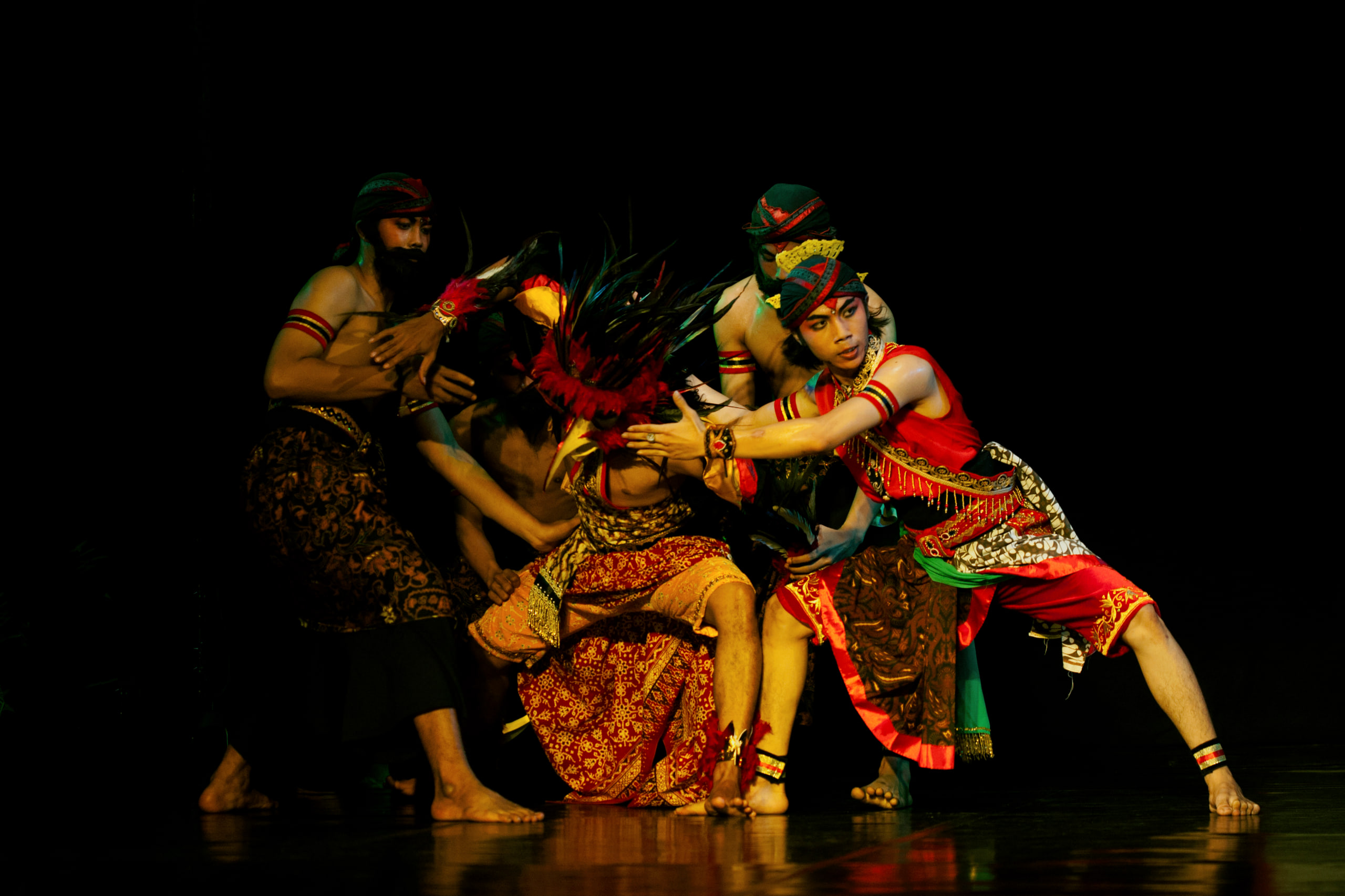
A Dongkrek performance combines choreographed movements, traditional percussion music, theatrical storytelling, and expressive masks to portray the eternal struggle between good and evil. Beyond narrating the legendary expulsion of the plague, the performance conveys enduring values such as courage, leadership, solidarity, and the importance of unity in overcoming adversity.
Today, Dongkrek has evolved beyond its original ritual function. It is regularly performed at cultural festivals, regional celebrations, and heritage preservation events throughout Madiun. Although its role has expanded into a form of public entertainment, Dongkrek continues to preserve the historical memory and philosophical values that inspired its creation more than a century ago, making it one of East Java's most distinctive living cultural traditions.