News
Gamparan: A Traditional Stone Game of Accuracy and Teamwork
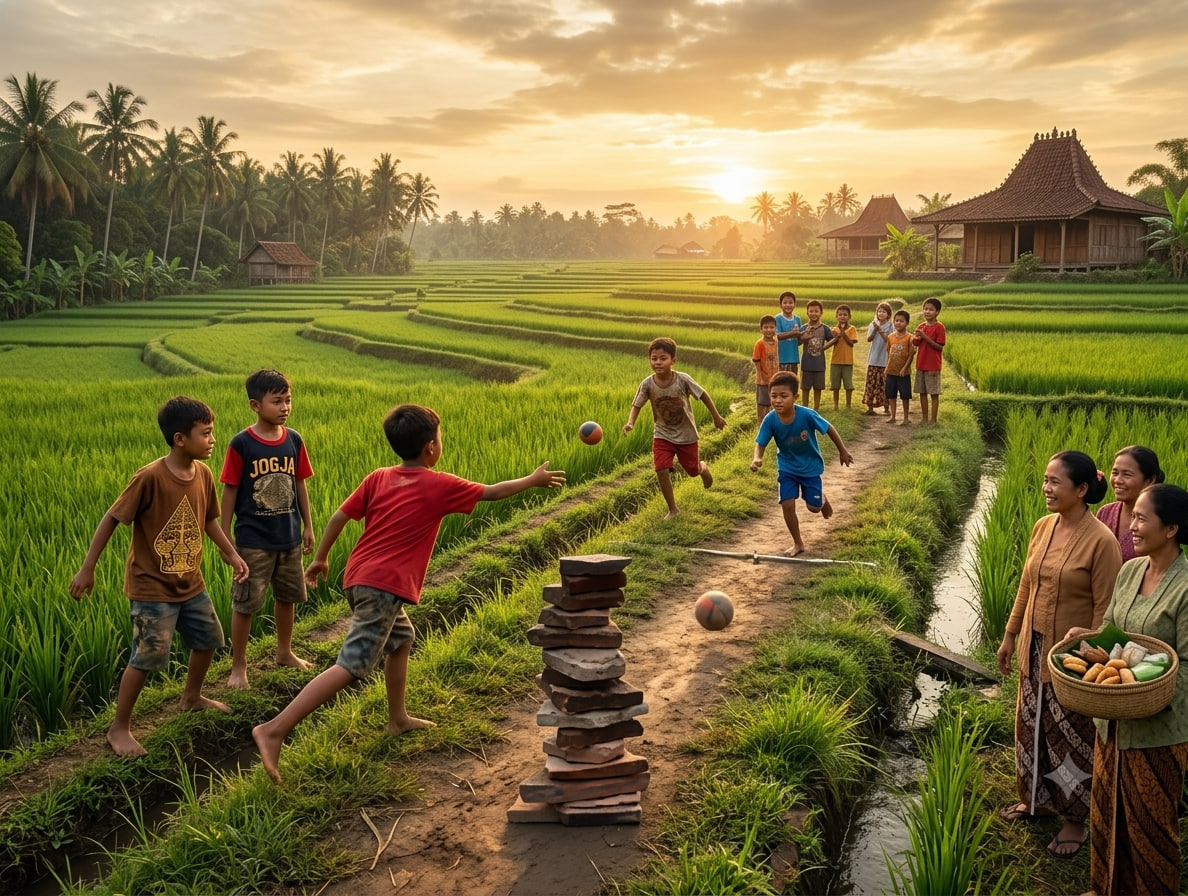
Among Indonesia's many traditional children's games, Gamparan stands out as a simple yet exciting activity that requires little more than a few stones and an open space. Long before modern toys and digital entertainment became common, children spent hours playing this game, sharpening their accuracy, coordination, and teamwork through friendly competition.
Gamparan is played in pairs or teams, which means the number of participants must be even. Players are divided into two groups: one team takes the first turn while the other acts as the defending side. The starting team is usually determined through a simple draw, such as the familiar hompimpa game played by Indonesian children.
The equipment is remarkably simple. Two types of stones are needed: a small throwing stone called a gacok and a larger target stone known as a gasangan. Because these materials are easy to find, Gamparan could traditionally be played almost anywhere without special preparation.
The game is usually held on a flat piece of ground measuring roughly three by six meters. Before play begins, participants draw several boundary lines on the ground. These include a line for placing the target stones, a throwing line approximately six meters away, and another line marking the playing area. These boundaries ensure that the competition remains fair for both teams.
Once the field is ready, the attacking team attempts to throw its gacok toward the gasangan. Success depends on striking the target accurately while following the agreed rules. After one team completes its turn, the opposing team takes its chance, giving both sides equal opportunities to score.
Although the rules appear straightforward, Gamparan requires considerable skill. Players must carefully judge distance, throwing angle, and force. A weak throw may fall short of the target, while an overly powerful throw can easily miss it. Consistent practice helps players develop greater precision and control.
Beyond physical skill, Gamparan encourages teamwork and communication. Every member contributes to the team's success by supporting one another, discussing strategies, and maintaining a spirit of fair play. These values make the game more than simple entertainment—it also serves as an enjoyable way for children to develop discipline, cooperation, and confidence.
Today, Gamparan is played less frequently as children's lifestyles change and open play spaces become increasingly limited. Nevertheless, it remains an important part of Indonesia's traditional games, demonstrating how simple natural materials could create meaningful recreation. Preserving Gamparan helps keep alive a cultural heritage that celebrates creativity, friendship, and the joy of playing together.