News
Javanese Gamelan: Indonesia's Timeless Musical Heritage
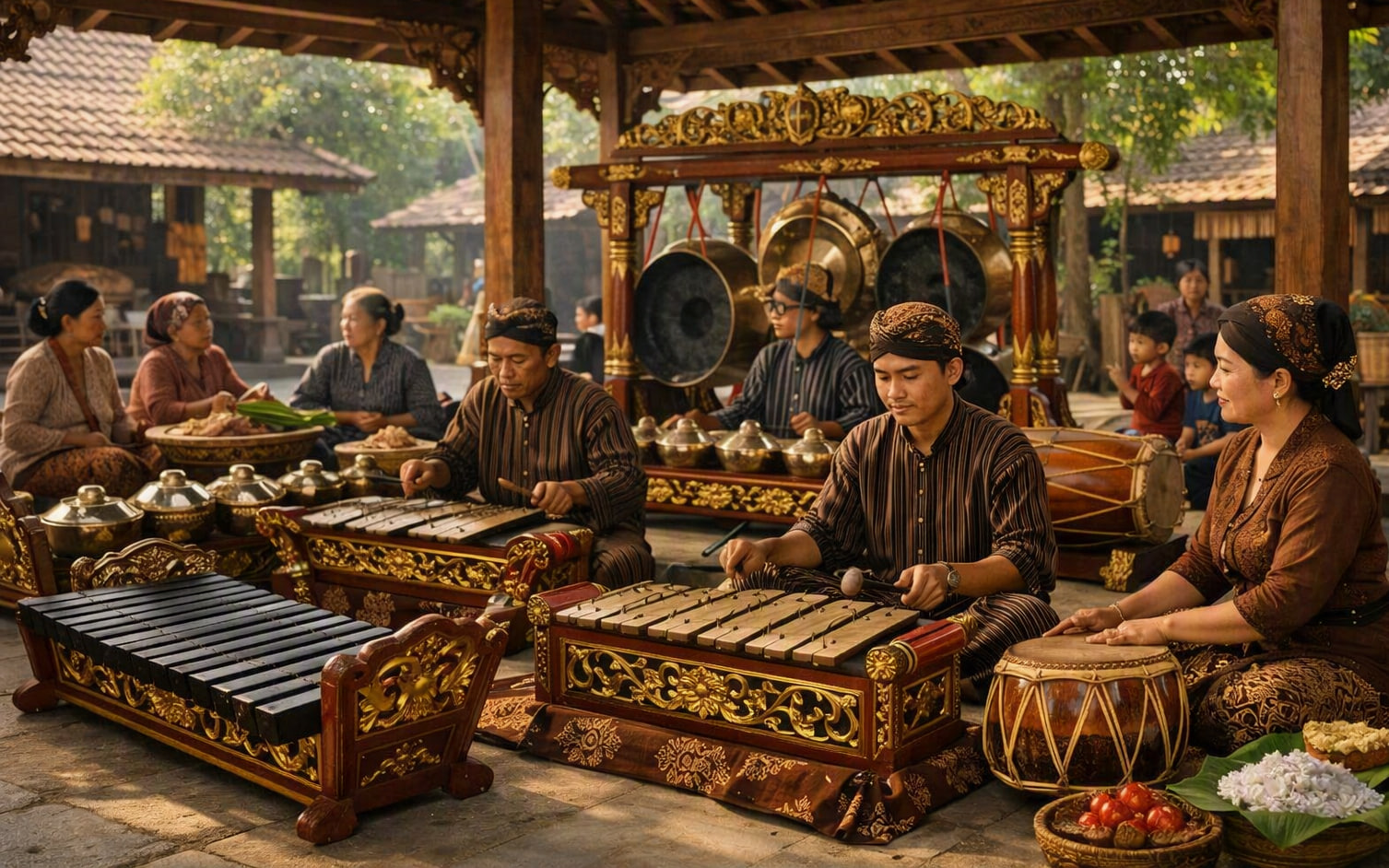
Javanese gamelan is one of Indonesia's most remarkable cultural treasures, representing centuries of musical tradition and artistic craftsmanship. Rather than being a single instrument, gamelan is an ensemble made up of numerous instruments that work together to create a distinctive musical system. Each instrument contributes a unique role, producing the rich and layered sound that has become synonymous with Javanese culture.
A complete gamelan ensemble includes a wide variety of instruments with different musical functions. The bonang, for example, develops the melody and helps guide the musical flow. It consists of several types, including the bonang barung, bonang panembung, and bonang penerus, each occupying a different pitch range. Another essential instrument is the gambang, a wooden xylophone-like instrument with one of the widest melodic ranges in the ensemble.
Other instruments such as the saron, slenthem, kenong, kempul, gong, rebab, kendhang, and bamboo flute work together to produce a balanced musical texture. Some instruments establish the main melody, others maintain the rhythm, while large gongs mark the structural divisions of a composition. This combination creates the harmonious sound that distinguishes gamelan from other musical traditions around the world.
Javanese gamelan also possesses a rich musical vocabulary. A performance commonly begins with a buka, an introductory melody played by selected instruments before the entire ensemble joins in. The music then develops around the balungan, the core melodic framework that serves as the foundation for the composition. Musicians also recognize numerous forms of compositions, including ayak-ayakan, bubaran, and bonangan, each with its own musical structure and performance style.
Beyond musical performances, gamelan has long accompanied many aspects of Javanese cultural life. It provides the musical foundation for shadow puppet theatre (wayang kulit), classical dance, royal ceremonies, and traditional rituals. Different occasions often require different ensemble arrangements, such as the gamelan wayangan used for puppet performances or the complete gamelan gedhe employed during important ceremonial events.
The materials used to produce gamelan instruments are equally diverse. High-quality sets are traditionally cast from a bronze alloy known as gangsa, a mixture of copper and tin. However, communities have also developed ensembles made from iron, brass, and even bamboo, such as the gamelan krumpyung found in parts of Yogyakarta. Each material produces its own distinctive sound while reflecting the ingenuity of Indonesian craftsmen.
The tradition has also preserved an extensive vocabulary describing instrument construction, tuning systems, musical techniques, and performance practices. These specialized terms demonstrate the depth of knowledge developed by generations of Javanese musicians and instrument makers, making gamelan not only a performing art but also a sophisticated musical tradition.
Today, gamelan continues to thrive both in Indonesia and abroad. It is taught in schools, performed at cultural festivals, preserved in royal courts, and studied by musicians around the world. As one of Indonesia's greatest cultural legacies, gamelan remains a living tradition that continues to inspire new generations while preserving the artistic wisdom of the past.