News
Flowers That Speak Without Words: The Hidden Language of Javanese Ritual Offerings
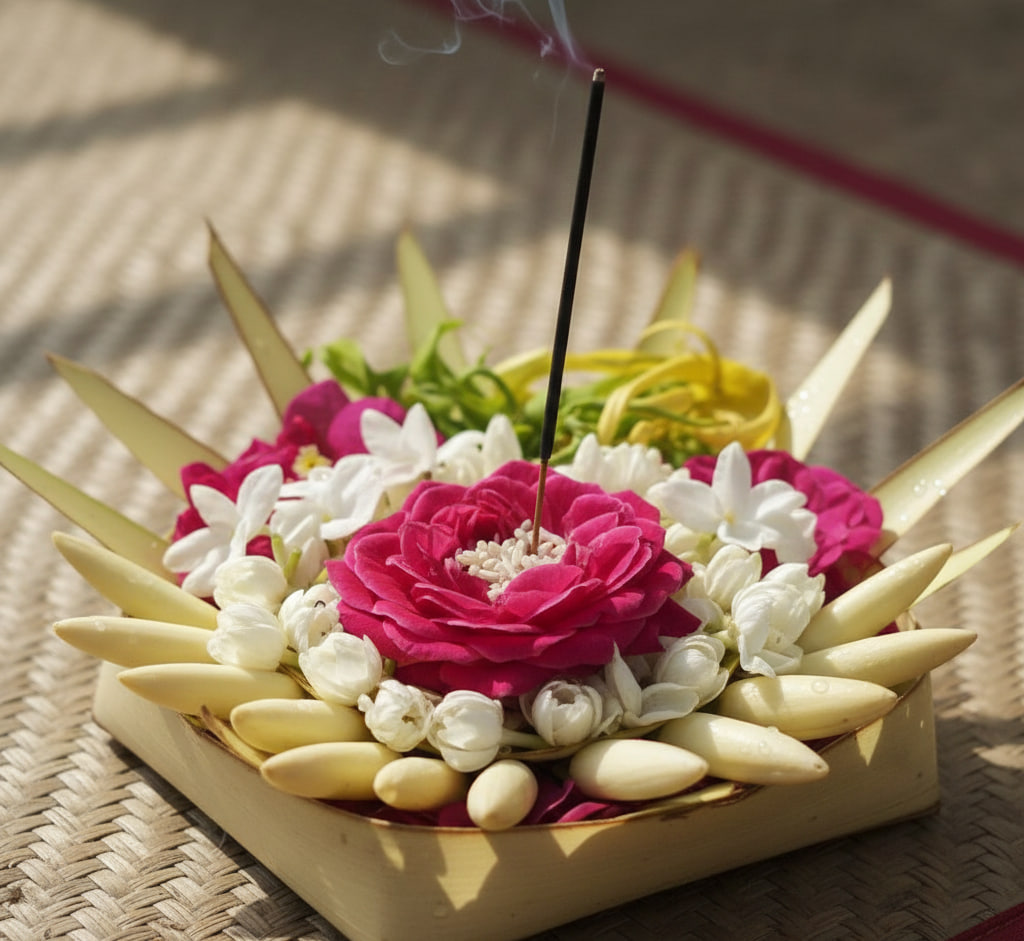
In Javanese culture, traditional rituals are never merely ceremonial. They are moments where humans, nature, and inner discipline meet. From weddings and pregnancy rites to birth celebrations, coming-of-age rituals, and funerals, one element almost always appears: flowers.
Flowers are not chosen simply for their beauty or fragrance. In Javanese belief, they carry positive energy, serve as vessels for prayers, and function as silent symbols of ancestral hopes. Each flower used as ritual offering (uborampe) holds its own philosophical meaning.
Five flowers frequently appear in these rituals: kanthil, jasmine, ylang-ylang (kenanga), rose, and telon. Each one conveys a distinct life lesson.
Kanthil: Attachment and Remembrance
Kanthil symbolizes the idea that true knowledge is achieved through practice and perseverance. This is reflected in the Javanese saying “ngelmu iku kelakone kanthi laku”—wisdom must be lived, not merely learned.
In weddings, kanthil represents emotional bonding. The word itself suggests “clinging” or “sticking,” expressing the hope that love will remain attached and unbroken throughout life.
Jasmine: Acting from the Heart
Small, white, and fragrant, jasmine represents purity of intention. It is often interpreted as “melad saka njero ati”—everything should come from the depths of the heart.
Jasmine reminds people to align intention, speech, and action, so that nothing done causes harm to others.
Kenanga: Remembering Noble Values
Kenanga symbolizes the effort to reach higher moral ground. It is also interpreted as “kenangen ing angga”, meaning “remember within yourself.”
This flower urges people not to forget ancestral legacies—traditions, arts, philosophies, and spiritual wisdom—believed to guide life toward harmony in both worldly and spiritual realms.
Rose: Intention, Sincerity, and Human Origin
The rose is perhaps the most familiar flower in Javanese society. It is often interpreted as “mawi arsa”, meaning every action should be driven by clear intention.
Another meaning emphasizes sincerity—living without ulterior motives. Red roses symbolize the mother as the source of life, while white roses represent the father. Together, they reflect balance, love, and harmony, echoed in the red-and-white porridge used in birth rituals.
Telon: Three Becoming One
Unlike the others, telon is not a single flower. It is a combination of kanthil, jasmine, and rose, bound together.
Telon symbolizes three ideals of a fulfilled life: material sufficiency, knowledge, and self-mastery. These three flowers form the core of ritual offerings, representing balance between the physical and spiritual dimensions of life.