News
Reading the Sky, Working the Fields: How Javanese Farmers Understood the Seasons
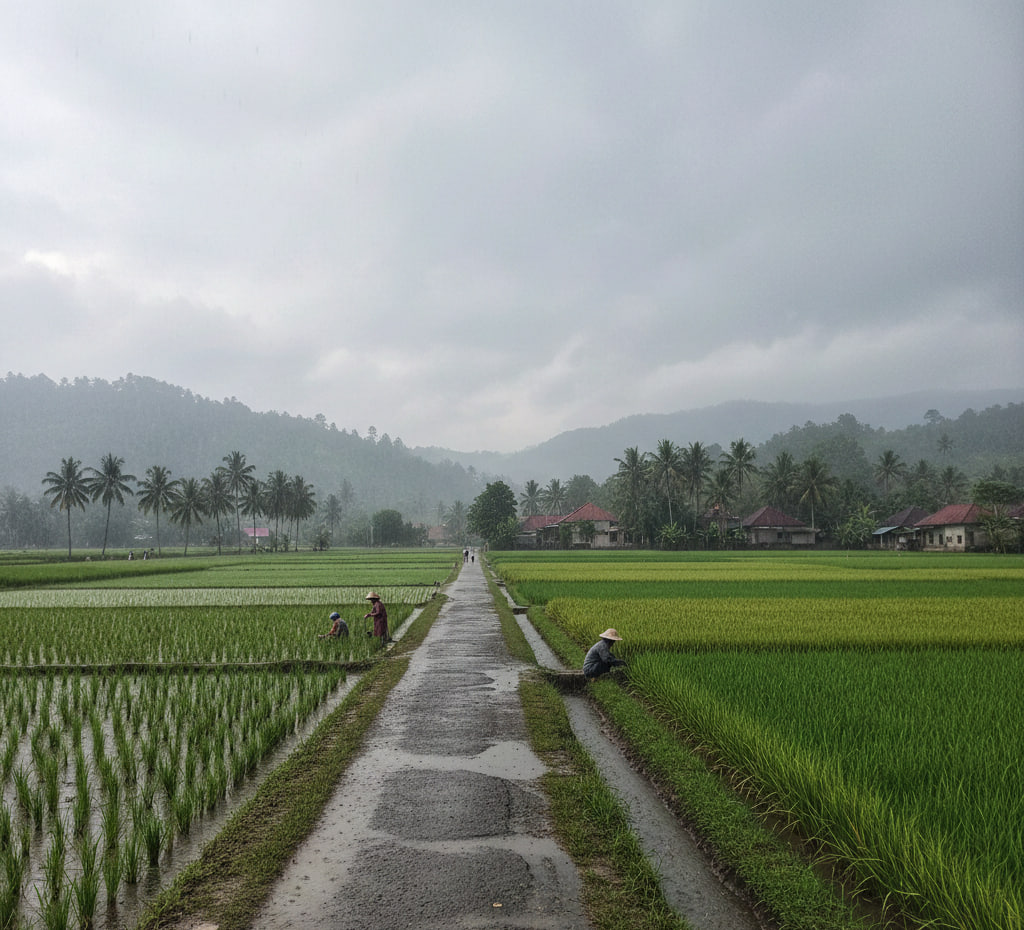
Long before weather forecasts appeared on phone screens, Javanese farmers relied on the sky. They observed the movement of the sun, the appearance of constellations, and even the length of their own shadows to decide when to plant, wait for rain, or prepare for harvest.
This traditional knowledge is known as pranoto mongso, a seasonal calendar that connects astronomy, meteorology, and agricultural life. It is more than a calendar—it is a living guide that shapes the rhythm of farming communities.
In 1855, Sunan Pakubuwono VII of the Surakarta Palace refined and standardized this system, making it an important reference for Javanese farmers, including those in Bandongan.
Twelve Seasons in One Year
According to pranoto mongso, a year consists of 365 days divided into twelve mongso, or seasons. Each mongso lasts a different number of days, ranging from 23 to 43 days. These seasons are determined by the appearance of certain star constellations in the sky, along with natural signs on earth. Farmers could even estimate seasonal changes by observing the length of a person’s shadow at midday.
Each mongso is believed to carry its own character and temperament, reflecting how closely human life is tied to nature.
The Character of the Twelve Mongso
In brief, the twelve seasons are understood as follows:
-
Mongso Koso (Kartiko)
Occurring from late June to early August, marked by falling leaves and barren trees, symbolizing compassion amid dryness. -
Mongso Karo (Puso)
A short season when the soil begins to crack, associated with carelessness and instability. -
Mongso Katelu (Manggasari)
Plants begin to climb and grow steadily, reflecting thrift and restraint. -
Mongso Kapat (Sitro)
Water sources shrink and the land dries further, characterized by orderliness and caution. -
Mongso Kalimo (Manggakala/Monggokolo)
The arrival of rain. Farmers start planting dry-field crops, and the season is seen as expressive and lively. -
Mongso Kanem (Noyo)
A long season when plants begin to bear fruit, associated with intelligence and prosperity. -
Mongso Kapitu (Palguna)
As the sun shifts northward, this season is believed to reduce disease. -
Mongso Kawolu (Wisoko)
Known as the mating season for animals, symbolizing carelessness or underestimation. -
Mongso Kasongo (Jito)
A lively period marked by the sounds of insects, associated with blessings. -
Mongso Kasapuluh (Srawono)
Livestock begin pregnancy, and the season is considered emotionally sensitive. -
Mongso Dhesta (Padrawono)
The time when young birds need feeding, symbolizing temptation and moral testing. -
Mongso Saddha (Asuji)
The Javanese “cold season,” marked by balance and moderation.
Grounded Knowledge of the Sky
Pranoto mongso proves that traditional Javanese knowledge is not mere folklore. It is the result of centuries of careful observation, passed down through generations, and effective in sustaining agricultural life. For the Javanese, reading the stars was never about predicting fate—it was about knowing when to plant rice so life could go on.