News
Kendi: Indonesia's Traditional Water Vessel and Its Enduring Cultural Legacy
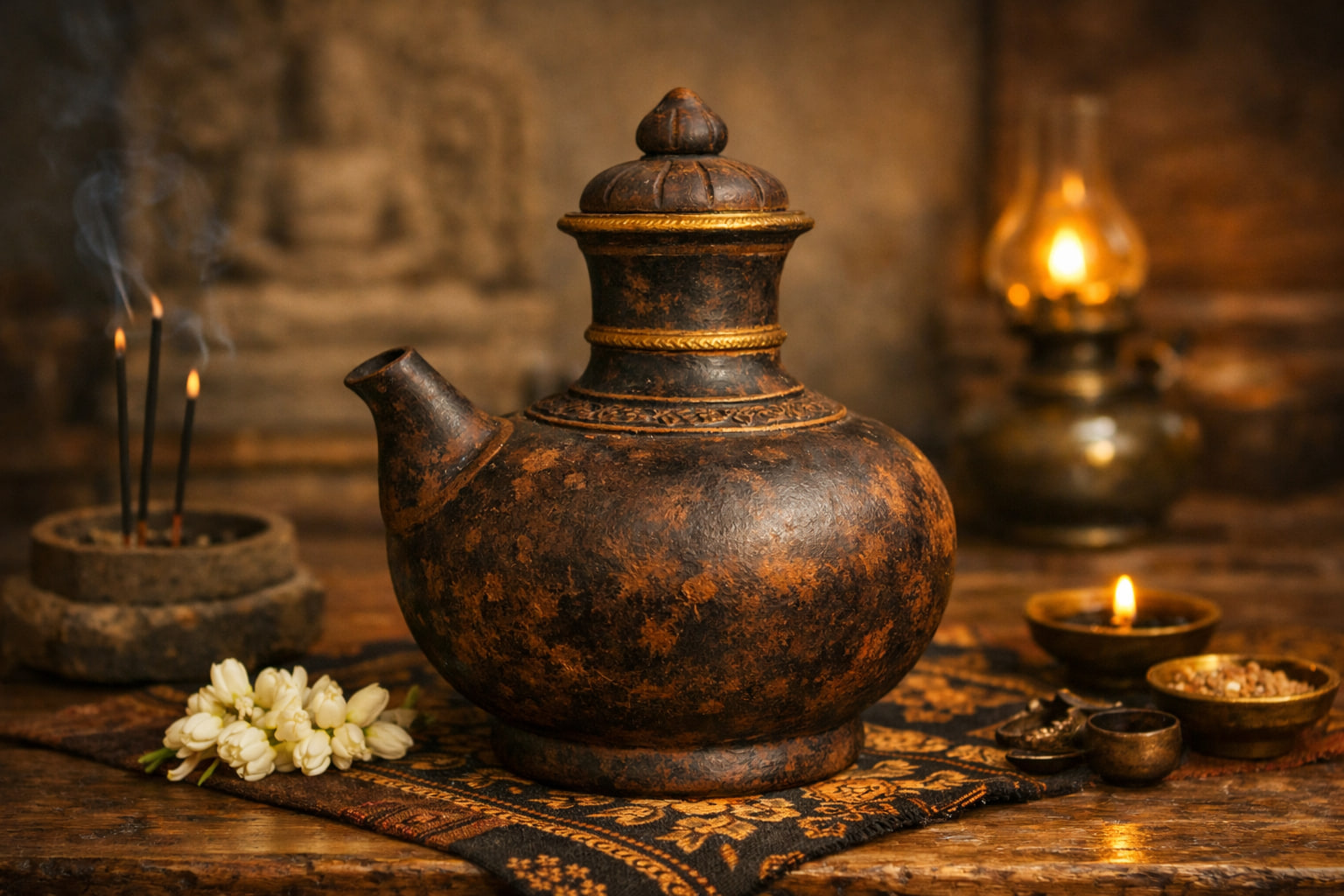
At first glance, the kendi appears to be nothing more than a simple earthenware water container. Yet behind its distinctive form lies a remarkable history that connects ancient technology, religious traditions, cultural exchange, and everyday life across Asia. In Indonesia, the kendi is far more than a household utensil—it is a cultural artifact that has endured for centuries.
The word kendi derives from the Sanskrit term kundika, meaning a water vessel. In Hindu tradition, the kundika is associated with the deities Brahma and Shiva, while in Buddhism it is carried by monks and pilgrims as a sacred object during spiritual journeys. Through the spread of Indian culture across Southeast Asia, the concept of the kendi was introduced and gradually transformed into regional forms that reflected local artistic traditions.
Although water vessels were already known in ancient civilizations such as Mesopotamia, Greece, and India, the Indonesian kendi developed its own distinctive characteristics. Archaeological evidence indicates that pottery production existed in the Indonesian archipelago since prehistoric times. However, the spouted kendi—designed to pour water hygienically without touching the vessel's rim—appeared around the ninth century CE. Reliefs at Borobudur Temple depict vessels of this type, demonstrating that sophisticated ceramic craftsmanship had already flourished during the Hindu-Buddhist period.
A traditional kendi typically features a rounded body, a narrow neck, and a side spout for pouring water. This design is both practical and hygienic, allowing people to drink directly from the flowing stream without placing their lips on the container. Scholars also suggest that its overall shape was inspired by dried gourds, which served as natural water containers long before pottery became widespread.
Across Indonesia, the kendi evolved into numerous regional forms and names. In Java it is also known as gogok or glogok, in Bali as kundi or caratan, among the Batak people as kandi, and in West Sumatra as labu tanah. These regional variations illustrate how the vessel adapted to local traditions while maintaining its essential function.
Beyond its practical use, the kendi holds important symbolic meaning in Indonesian culture. During traditional Javanese and Sundanese wedding ceremonies, water stored in a kendi represents purity, harmony, and the hope for a prosperous marriage. In certain funeral traditions, a water-filled kendi is deliberately broken to symbolize the completion of one's earthly journey. Miniature kendi are also used in ritual offerings and religious ceremonies, while the vessel famously appears in Surakarta's Bondan Dance, where the dancer performs gracefully while balancing atop a kendi.
Indonesian artisans also created remarkable variations of the vessel. Central Java is known for the Kendi Maling, a cleverly designed vessel with concealed openings that can only be filled from its base. Acehnese kendi display geometric forms influenced by Islamic and Middle Eastern artistic traditions, while Palembang produced ornate multi-spouted vessels decorated in red and gold for ceremonial purposes.
Although modern containers have gradually replaced the kendi in daily life, it continues to survive as an important element of Indonesia's cultural heritage. Preserved in museums, crafted by traditional potters, and still used in ritual practices, the kendi stands as a lasting testament to the ingenuity of ancient ceramic technology, the exchange of civilizations, and the enduring traditions that continue to shape Indonesian identity.