News
Khakkhara: The Sacred Buddhist Staff with a Rich Spiritual Legacy
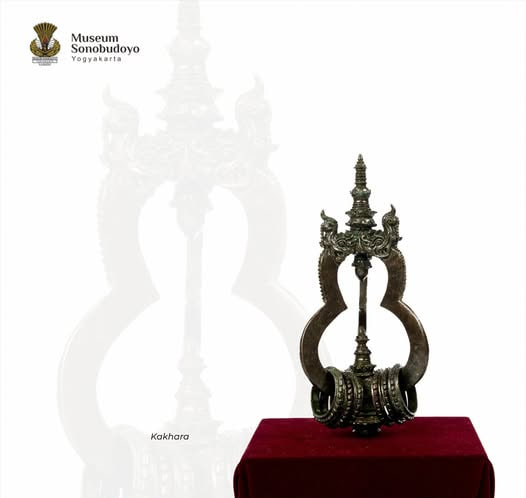
Among the many ritual objects found in Buddhist tradition, the Khakkhara is one of the most recognizable. Distinguished by its metal rings that produce a gentle rattling sound when moved, the staff is known by different names across Asia, including Shakuj? in Japan, Xizhang in China, and Seokjang in Korea. Beyond its distinctive appearance, the Khakkhara represents centuries of Buddhist history, symbolism, and monastic tradition.
The origins of the Khakkhara trace back to the early development of Buddhism in ancient India. According to the Vinaya tradition, the Buddha encouraged monks to carry this staff while traveling. The sound of its metal rings alerted wild animals to the monks' presence, allowing both humans and animals to avoid unnecessary harm. This practical function reflected the Buddhist principle of compassion toward all living beings.
As Buddhism spread throughout East Asia, the Khakkhara gradually evolved from a traveling aid into an important ceremonial object. During sutra chanting and religious rituals, the rhythmic sound of the rings helped maintain the tempo of recitations while creating a solemn atmosphere. In many Chinese monasteries, the staff also became a symbol of an abbot's authority. During major ceremonies, striking the Khakkhara on the ground represents the removal of ignorance and the call for all beings to seek enlightenment.
The design of the Khakkhara carries deep symbolic meaning. Typically consisting of a wooden shaft topped with a metal finial supporting several hanging rings, every element may represent Buddhist teachings. Four loops can symbolize the Four Noble Truths, six rings the Six Perfections (Paramitas), and twelve rings the chain of dependent origination. These symbolic numbers transform the staff into a visual expression of Buddhist philosophy.
The Khakkhara also occupies a prominent place in East Asian art and literature. The Bodhisattva K?itigarbha, revered as the protector of children and travelers, is traditionally portrayed holding the staff as a symbol of guidance and compassion. In classical Chinese literature, the Khakkhara became an enduring emblem of wandering monks who devoted their lives to spreading Buddhist teachings.
Legends surrounding the Khakkhara further enriched its cultural significance. Stories from China and Japan tell of sacred springs emerging after a monk struck the ground with the staff, reflecting the belief that it possessed not only ceremonial importance but also spiritual power associated with blessings and protection.
Beyond religious practice, the Khakkhara was occasionally adapted for self-defense by traveling monks. Its wooden shaft could be used to block attacks, while its metal head provided additional defensive capability. Even so, its martial use remained secondary to its primary role as a symbol of discipline, wisdom, and compassion.
Today, the Khakkhara continues to be used in Buddhist ceremonies across Asia. More than a ritual implement, it stands as a timeless reminder of Buddhism's enduring values, preserving centuries of history, philosophy, and cultural heritage within a single sacred object.